猫とグルメ、初めての台湾<前編>/First time in Taiwan:Cats and fine foods<Part 1>
A Four-Day, Three-Night Trip to Taiwan Over a Long Weekend
In mid-December, I finally took a four-day, three-night trip to Taiwan over a weekend—a place I had long wanted to visit after being encouraged by many friends. The package was remarkably affordable at 54,000 yen, including flights on Scoot, the Singapore Airlines–affiliated low-cost carrier, and a hotel in northern Taipei. With a flight time of about three and a half hours, it truly felt like a short trip to a neighboring country.
(English text continues to the latter half of the page)
週末をはさんで3泊4日の台湾旅行へ
多くの友人に勧められて以前から行ってみたかった台湾に、12月半ばに週末を挟んで3泊4日の旅に出た。飛行機はシンガポール航空系列のLCCスクート、台北北部のホテルも入って54,000円という格安パック。運行時間は3時間半程度というすぐお隣りの海外旅行に行ってきた。
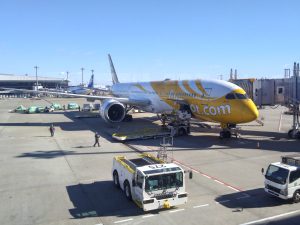
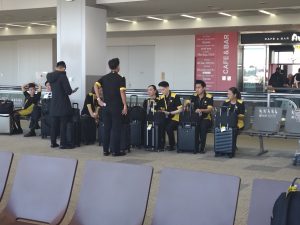
機体はボーイングの仕様、LCCにも関わらずターミナルは成田空港の第1ターミナル、これは便利でいい。キャビンアテンダントは黄色と黒のユニフォームに身を包みScootiesの愛称で呼ばれていた。

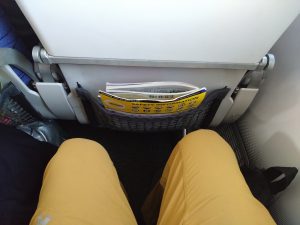
LCCだけに座席はこんな感じ。さすがに長時間は辛いが、3時間程度なら贅沢は言えない。
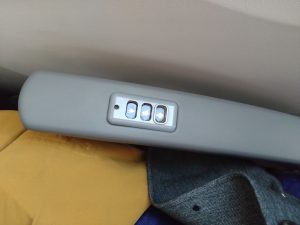
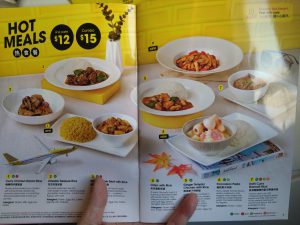
座席からコントロールできるのはこの3つだけ(読書灯、スタッフの呼び出し・解除)。もちろん機内食、ドリンクのサービスは一切なく、飲食は実費で購入(ちなみに表示されている価格はシンガポールドル)。ビデオサービスもないので、長時間のフライトにはきついかな、と感じる。
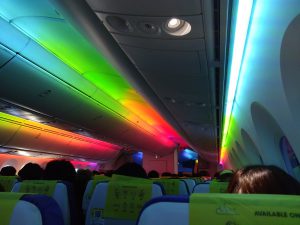
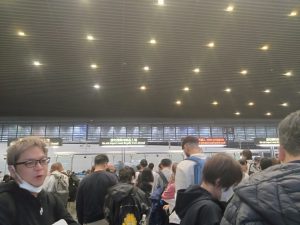
着陸が近づくと機内の照明がどういうわけだかレインボーカラーに。台北までは3時間40分程度(帰りは3時間強に縮まる)、入国審査はかなりの人数が並んだが進行が速く、特に日本人のパスポートだと何の質問もなく規定通りに顔写真と両手の人差し指の指紋をとって1分ほどで終了。その手順も目の前のタブレットに漫画風のイラストで示されるので、言葉に自信のない日本人旅行者にも実に優しい構造。
今回のツアーはHIS提供の“スケルトンタイプ”、すなわち往復の飛行機と宿泊をパックにしながら現地ではほぼフリーというタイプのツアー。到着後に台北市内に向かう時だけチャーターしたバスと現地の添乗員が付いてくる。現地旅行会社から派遣された添乗員は4年間日本に留学していた人間で20代後半のように見える。1時間程度のバス乗車時間のなかで言葉巧みにオプショナルツアーに誘い、“手数料が要らない両替所”というところに連れていく。と言っても、着いた“両替所”はビルの地下にある中国茶葉の店に付随したところで、恐らくこの店から旅行代理店はコミッションをもらっているのだろう。“手数料無料”と言いながら、レートがけっこう悪い。まあ、とても安いツアーを提供してもらっているので、このくらいは付き合ってあげよう。もちろんここでは何も買わずに、市内でゆっくり相場を確かめてから買うことにする。
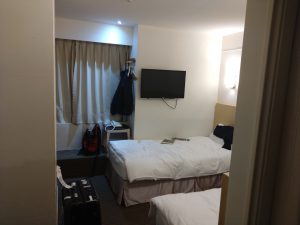
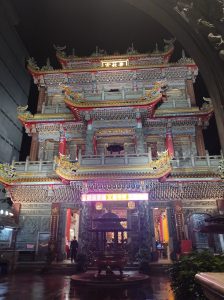
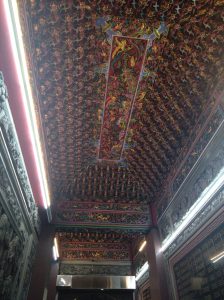
着いたホテルは台北駅から4駅、中山小学校という地下鉄駅から歩いて5分のところにあるビジネスホテル。隣りがセブンイレブン、歩いて10分以内に商店街や夜市までコンパクトに揃っており実に便利なロケーション。通りを挟んで向かい側には立派な(道教の?)寺院もある。これが1泊2人で朝食もついて8,000円程度なので、やはりHISの価格提供力は強い!ただ建物が古く、トイレットペーパーを便器に流せないことには閉口。まあ、台湾に来たらこれはしょうがない。

夜市の夕食、ホテルの近場と、士林(シーリン)夜市
19:00頃にホテルに着いたため、夕食は歩いて5分程度の夜市へ。
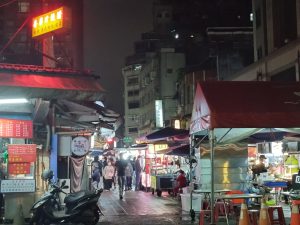
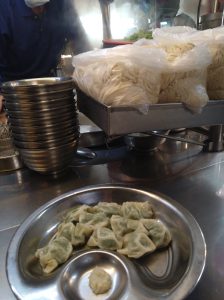
比較的小ぶりの夜市だけど、人気の店には行列ができている。水餃子で人気の屋台を見つけ、ここで夕食。ニンニクの効いた水餃子に牛肉麵をつけて800円程度。台湾の物価はかなり日本に近づいているが、それでも夜市は安くていい。ただ、ほとんどの屋台ではビールを始め、飲料の提供はしていないので自前で調達すること。また言葉はどうかと言うと、中高年以上の方々にはほぼ英語は通じない。日本ではよく台湾の大学生と英語で会話しているので、少しはできるかと思っていたが、ほぼ日本の状況と変わりなし。ただ片言の日本語や、特に数字を日本語で覚えている方は観光地で非常に多かった。
次は滞在最後の夜に訪ねた台北最大の士林(シーリン)の夜市。日本のTV番組でも、台湾を紹介する番組では必ず登場するところ。
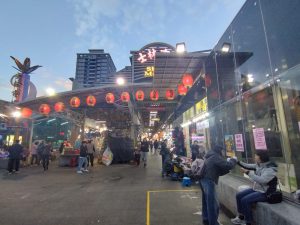
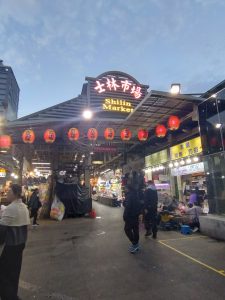
とにかく人が多いところだけに、必ずスリがいるぞ、と添乗員さんからも警告されていたところ。17:00からの開店で、かなり早いうちに行ったがすでに人でいっぱい。
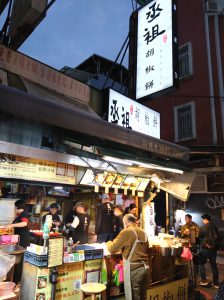
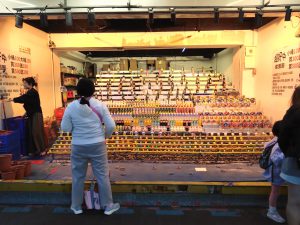
左が今回の夜市体験で一番美味かった胡椒餅の屋台、右は広大なスケールの輪投げ。
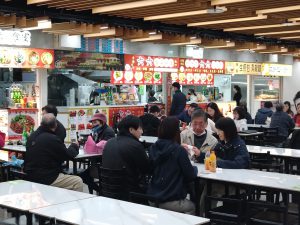
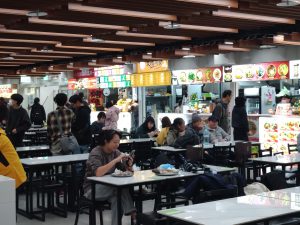
夜市の地下には広大なフードコートも。こういうところを見ると、この夜市の観光地としての年輪と成功の歴史を感じる。
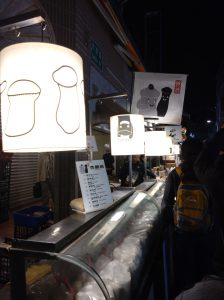
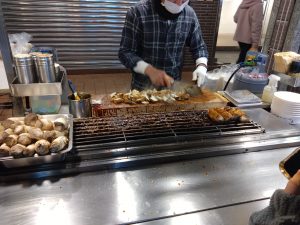
屋台の中でも目立つ行列を見せていたところが上の写真。これはエリンギのタレ焼きの屋台で、これまで見たことのないもの。こちらも相方と行列に並んで買ってみた。タレを塗った極太のエリンギを炭火で焼き、一口大に切って胡椒ベースの調味料をかけて食す。確かに食感がヘルシーな肉のようで、ふりかけた調味料にベストマッチ。これに気づいた店主は偉い。ちょっとしたアイデアで行列店を演出することが可能になるのは、ビジネスの上で大事な教訓と言えそうだ。
郊外へ1日散歩、猫の村と、江の島を思わせる一大観光地「九份」
台北から郊外への日帰り散歩では、猫の村と呼ばれる猴硐(ホウトン)、「千と千尋の神隠し」のモデルになったと言われる建物の夜景で有名な九份(チウフェン)、ランタン気球を飛ばせることで有名な十份(シーフェン)を巡る予定だったものの、台鉄(台湾の国鉄)のホームに行ったら十份まで向かう平渓線が土砂崩れのために2か月先まで不通に!ちょっとショッキングなアクシデントだったけど、とりあえず一番の目的だった猴硐(ホウトン)までは電車が通っているので、まずはここを目指すことにして、十份(シーフェン)は諦めることに。
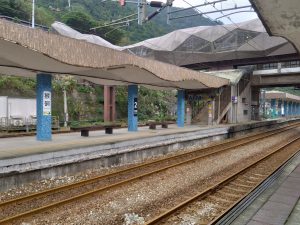
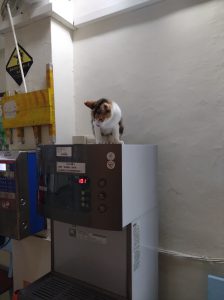
台北から1時間弱のホウトンの駅は改札口を出たその瞬間から猫だらけ!村を挙げて猫を可愛がっていることがわかる。
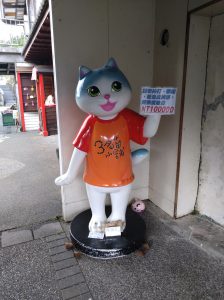
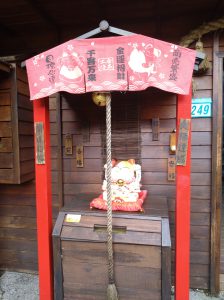
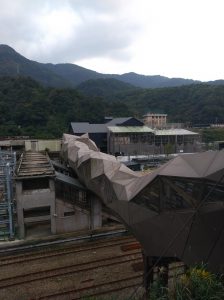
ホウトンはもともと炭鉱の村、日本統治時代から石炭の採掘で潤っていたが、戦後に廃坑になってすっかり寂れてしまったが、もともと多かった猫を活用して観光資源とする動きが高まり、猫と村人の共生する姿がSNSを通じて広まり、2013年には大手報道機関CNNにより「猫が観光名所を凌駕する5つの場所(英語:5 places where cats outshine tourist attractions)」の一つに選ばれた。鉄道駅から猫を象った跨線橋を通って山沿いに広がる村に入ると、もうそこら中が猫だらけ!まったく人間を恐れる素振りもなく、マイペースで暮らしている。
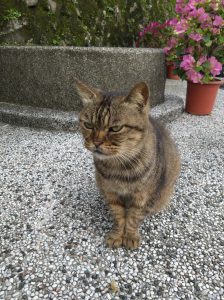
この子は村の入り口に陣取っていたちょっとむくれた感じの猫。
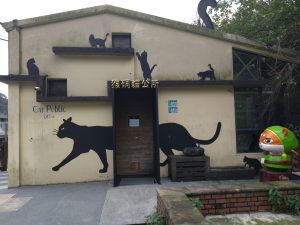
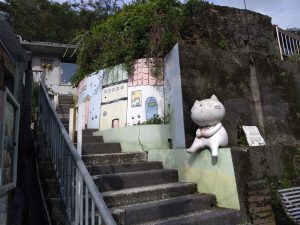
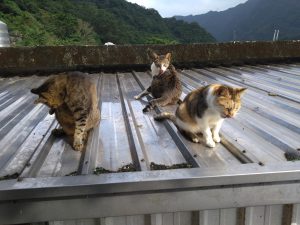
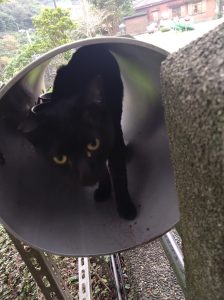
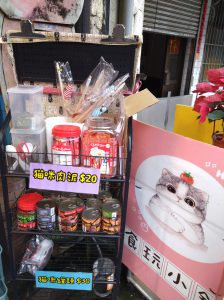
村の中には「むやみな猫の餌やり禁止」との注意書きも見かけたが、実際には売店で日本製のチュールなども売っており、猫用フードであれば黙認のようだ。
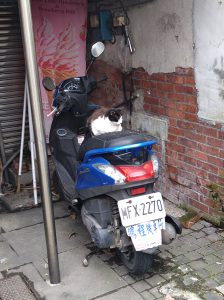
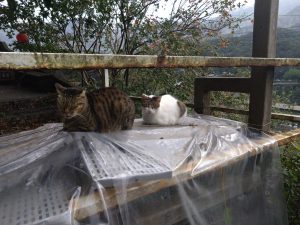

街中にあふれる猫は確かにそれだけで観光資源だ。猫好きには一日中いても飽きないところ。ただその一方で、日本各地の猫で有名な土地で起こっている「観光客による不適切な餌やりによる健康被害」や「子猫の遺棄増加」などの問題も起こっているのではないか。炭鉱が廃れてから住民の自発的な努力で「猫の村」として世界的なスポットとなったところだけに、これらの諸問題に対して模範となるソリューションをホウトンが産みだせるようであれば、この猫の村も持続可能な猫好きのパラダイスでいられると感じた。
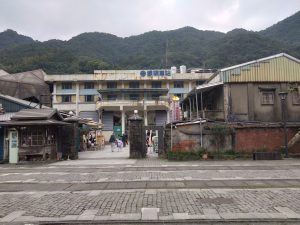
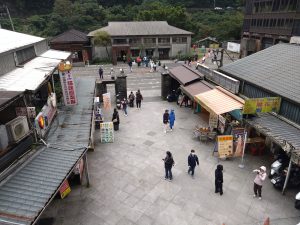
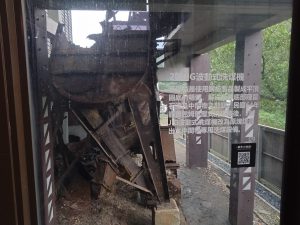
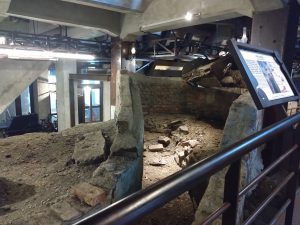
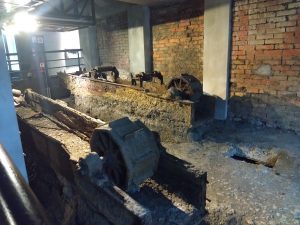
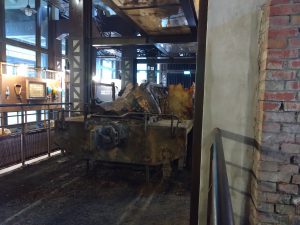
線路を挟んで村の反対側には、今は廃墟となった坑道施設が保存されている。街の建物もそうなのだが、高温多湿の亜熱帯である台湾では構造物の劣化が非常に速いように思える。この炭鉱も閉山は1990年だというのに、まるで100年前の廃坑を見ているようだ。廃墟マニアにはたまらないスポットかも知れない。
ホウトンから1駅前の瑞芳(ルイファン)まで電車で戻り、駅の観光案内所で九份(チウフェン)への交通を確認する。ところがここが本当に観光案内所だろうかと思うほど英語が通じない!カウンターの女性はとてもにこやかに親切に対応してくれるのだが、半分くらいしか話が伝わらない、結局最後はタブレットの通訳機能を使って情報を確認した。結果としてチウフェンまではバスも出ているけど、タクシーを使っても220元(1,000円強)なので駅前からタクシーを拾うことに。ほんの15分ほどでチウフェンの山の中腹に到着。
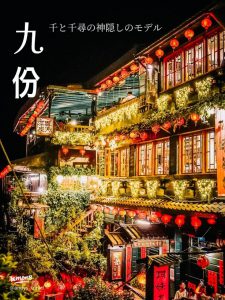
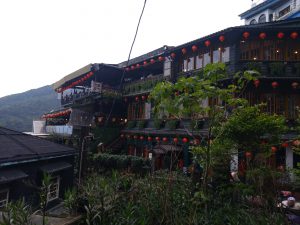
九份(チウフェン)の最大の呼び物は上の写真(観光素材をコピー)のような建物の夜景なので、夕方からすごい人波になり、スリも多数集まるそうだ。今回はスケジュールの関係で昼から訪問。
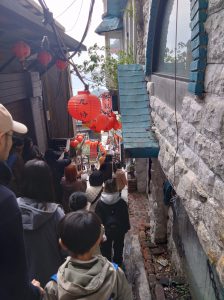
着いてすぐに気づいた!ここはまさに台湾の江の島だ、とにかくものすごい数のツーリストの群れが、狭い路地に並んだ商店に吸い込まれていく。スリも暗躍するはずで、ホテルを出たところから貴重品は持たずにできるだけ身軽にしてきた。
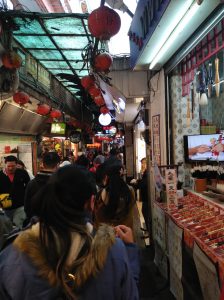
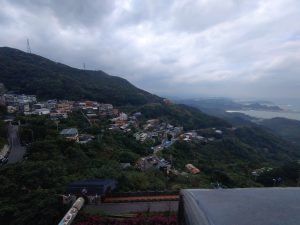
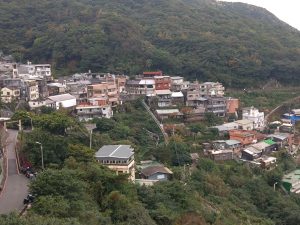
チウフェンの街は山の高台に展開しており、街外れの駐車場からは海が見える。もともとは金鉱で栄えた街で、かつての繁栄を匂わせる山間に広がるノスタルジックな街並みと、「千と千尋の神隠し」を彷彿とさせる雰囲気で有名になった静かな観光地のはずだったが、今や首都台北から1時間程度の格好のエクスカージョンとして、日本の鎌倉のようなオーバーツーリズムの様相を呈している。
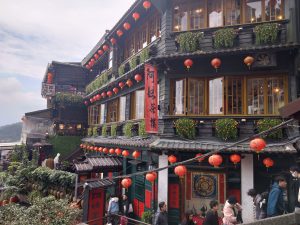
最初に貼り付けた観光写真の建物がここ。昼間だとやはり感動が少ないなあ。
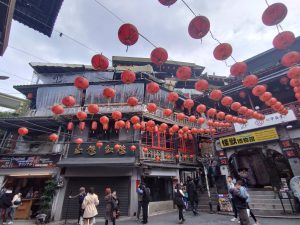
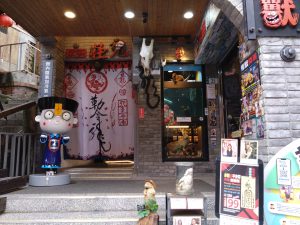
街中には原宿のように観光客向けのお店が並んでいるが、確かに人がもう少し少なければ静かで居心地のいい観光地になるかもしれない。しかし観光客が減少すれば、現在のお店は採算が取れなくなるし、これが人気観光地の難しい問題。
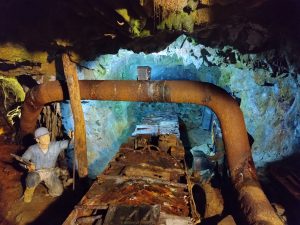
チウフェンのすぐ隣りには、金瓜石と呼ばれる金鉱山がある。清朝末期の1893年に金鉱脈が見つかり、一時は台湾全土から砂金堀りが集まりゴールドラッシュの様相を呈したところ。ただ発見直後の1895年の下関条約により台湾は日本に割譲され、日本統治時代が始まる。日本政府は即座に民間による金採掘を禁止し、日本の会社による本格的な金鉱開発が始まる(1933年に日本鉱業株式会社に経営権譲渡)。もっとも資源の枯渇などから太平洋戦争中の1943年頃には採掘中止、終戦後は国民党に接収され、銅鉱山として再開発が行われるが、最終的には1987年に廃坑に。現在では鉱山街を再現した広大な金鉱博物館として公開されている。

台湾旅行記の前編はここまで。後編では故宮博物館と、初めての台湾で感じたことなどを書く予定です。
A Four-Day, Three-Night Trip to Taiwan Over a Long Weekend
In mid-December, I finally took a four-day, three-night trip to Taiwan over a weekend—a place I had long wanted to visit after being encouraged by many friends. The package was remarkably affordable at 54,000 yen, including flights on Scoot, the Singapore Airlines–affiliated low-cost carrier, and a hotel in northern Taipei. With a flight time of about three and a half hours, it truly felt like a short trip to a neighboring country.
The aircraft was a Boeing model, and despite being an LCC, it departed from Terminal 1 at Narita Airport, which was both convenient and welcome. The cabin attendants, dressed in striking yellow-and-black uniforms, were known by the nickname “Scooties.”
As you’d expect from an LCC, the seats were like this. They would be tough for a long-haul flight, but for a three-hour journey, I couldn’t really complain.
From the seat, there are only three things you can control: the reading light and the call/cancel button for the cabin crew. As expected, there is no complimentary meal or drink service; all food and beverages must be purchased separately (and the prices shown are in Singapore dollars). There is also no in-flight video service, which might make a long-haul flight feel a bit tough.
As we approached landing, the cabin lights—somehow—shifted into rainbow colors. The flight to Taipei took about three hours and forty minutes (a little over three hours on the return trip). There was a fairly long line at immigration, but it moved quickly. With a Japanese passport, there were no questions at all—just the standard facial photo and fingerprints of both index fingers—and the process was over in about a minute. The procedure was clearly explained on a tablet in front of you using manga-style illustrations, making it extremely user-friendly even for Japanese travelers who are not confident in their language skills.
This tour was a so-called “skeleton-type” package offered by HIS—that is, a bundle including round-trip flights and accommodation, while leaving travelers largely free on the ground. Only the transfer into central Taipei after arrival was arranged, with a chartered bus and a local tour escort accompanying us. The escort, dispatched by a local travel agency, had studied in Japan for four years and appeared to be in his late twenties. During the roughly one-hour bus ride, he skillfully promoted optional tours and took us to what he called a “commission-free currency exchange.” In reality, this “exchange office” was attached to a Chinese tea shop in the basement of a building, and it was easy to imagine that the travel agency was receiving a commission from the shop. Despite being advertised as “commission-free,” the exchange rate was not very good. Still, given how inexpensive the tour was, I felt it was reasonable to go along with it. Of course, I didn’t buy anything there and decided to check the going rates in the city before making any purchases.
The hotel we stayed at was a business hotel located four stops from Taipei Main Station, about a five-minute walk from the Zhongshan Elementary School MRT station. With a 7-Eleven right next door and shopping streets and night markets all within a ten-minute walk, the location was extremely convenient. Across the street stood an impressive temple (Taoist, perhaps). At around 8,000 yen per night for two people including breakfast, the value was remarkable—once again highlighting HIS’s strong pricing power. That said, the building was old, and not being able to flush toilet paper was a drawback. Still, that’s something you more or less have to accept when visiting Taiwan.
Dinner at the Night Markets: One Near the Hotel and Shilin Night Market
Since we arrived at the hotel around 7:00 p.m., we headed to a night market about a five-minute walk away for dinner.
It was a relatively small night market, but the most popular stalls still had long lines. We found a stand famous for its boiled dumplings and had dinner there. A plate of garlic-flavored dumplings with a bowl of beef noodle soup came to about 800 yen. Prices in Taiwan have risen to nearly the same level as in Japan, but night markets are still affordable and well worth it. One thing to note is that most stalls do not sell drinks, including beer, so you need to bring your own. As for language, English is hardly spoken among middle-aged and older vendors. I had expected to get by a bit better, since I often speak English with Taiwanese university students in Japan, but the situation was not much different from Japan. On the other hand, many people—especially in tourist areas—knew a little Japanese, particularly numbers.
Next, we move on to Shilin Night Market, the largest in Taipei, which we visited on the final night of our stay. It is a place that always appears in Japanese TV programs introducing Taiwan.
Because the place is so crowded, we had been warned by our tour escort to watch out for pickpockets. Even though the market opens at 5:00 p.m. and we arrived fairly early, it was already packed with people.
On the left is the stall selling pepper buns—the best thing I ate during this night market visit. On the right is a ring toss game on a surprisingly large scale.
Beneath the night market is a vast food court. Seeing a place like this really makes you feel the long history and sustained success of the market as a tourist destination.
The stall drawing one of the longest lines is shown in the photo above. It was selling grilled king oyster mushrooms glazed with sauce—something I had never seen before. My companion and I decided to join the line and give it a try. Thick king oyster mushrooms were brushed with sauce, grilled over charcoal, cut into bite-sized pieces, and then topped with a pepper-based seasoning. The texture really did resemble that of lean meat, and it paired perfectly with the seasoning. The vendor deserves credit for coming up with the idea. It’s a good reminder that in business, a simple idea can be enough to turn a stall into a must-visit spot with a long line.
A Day Trip to the Suburbs: The Cat Village and Jiufen, a Major Tourist Spot Reminiscent of Enoshima
For a one-day excursion from Taipei into the suburbs, we had planned to visit three places: Houtong, known as the “cat village”; Jiufen, famous for its nighttime views and the buildings said to have inspired Spirited Away; and Shifen, well known for releasing sky lanterns. However, when we went to the Taiwan Railways platform, we learned that the Pingxi Line to Shifen was out of service for the next two months due to a landslide. It was a bit of a shocking setback, but since trains were still running to Houtong—our main destination—we decided to head there first and give up on visiting Shifen.
Houtong Station, less than an hour from Taipei, is full of cats the moment you step out of the ticket gates. It’s immediately clear that the entire village dotes on them.
Houtong was originally a coal-mining village. It prospered from coal production during the period of Japanese rule, but after the war the mines were closed and the village fell into decline. Over time, however, efforts grew to turn the village’s already large cat population into a tourism resource. Images of cats and villagers living together spread through social media, and in 2013 CNN selected Houtong as one of the “Five Places Where Cats Outshine Tourist Attractions.”
After crossing the cat-themed pedestrian bridge from the railway station and entering the village that stretches along the mountainside, you find cats everywhere. They show no fear of humans at all, living their lives at their own relaxed pace.
This slightly grumpy-looking cat was stationed at the entrance to the village.
There were signs around the village warning against feeding the cats indiscriminately, but in practice, cat food seemed to be tolerated—shops even sold Japanese-made treats like Churu.
The cats that fill the town are, in themselves, a major tourist attraction. For cat lovers, it is a place where you could happily spend an entire day without getting bored. At the same time, however, one can’t help but wonder whether Houtong faces some of the same issues seen in cat-famous spots across Japan—such as health problems caused by inappropriate feeding by tourists, or an increase in abandoned kittens.
Precisely because Houtong became a world-renowned “cat village” through the voluntary efforts of its residents after the coal industry declined, it would be meaningful if the village could develop model solutions to these challenges. If it can do so, this cat village may continue to thrive as a sustainable paradise for cat lovers.
On the opposite side of the tracks from the village, the remains of the old mine facilities—now abandoned—have been preserved. The buildings around town tell a similar story: in Taiwan’s hot, humid subtropical climate, structures seem to deteriorate very quickly. Even though this coal mine closed as recently as 1990, it feels more like looking at ruins from a hundred years ago. It may be a must-see spot for fans of urban exploration.
From Houtong, we took the train back one stop to Ruifang. At the tourist information center at the station, we tried to confirm how to get to Jiufen. Surprisingly, very little English was spoken—hardly what you would expect from a tourist information desk. The woman at the counter was extremely friendly and helpful, but only about half of what we said seemed to get through, and in the end we relied on a tablet’s translation function to confirm the details. It turned out that buses do run to Jiufen, but a taxi cost only 220 NT dollars (just over 1,000 yen), so we decided to grab one outside the station. About fifteen minutes later, we arrived halfway up the mountain in Jiufen.
Jiufen’s biggest draw is the nighttime view of buildings like the one shown in the photo above (a borrowed promotional image). As evening approaches, the crowds swell dramatically—and with them, pickpockets are said to gather as well. Because of our schedule, we visited during the daytime instead.
I realized it the moment we arrived: this place is Taiwan’s version of Enoshima. Huge waves of tourists are funneled into the narrow alleys lined with shops. No wonder pickpockets operate here. We had come prepared, carrying no valuables and keeping ourselves as light as possible from the moment we left the hotel.
Jiufen is built high on the mountainside, and from the parking area on the edge of town you can see the sea below. Once a prosperous gold-mining town, it became known for its nostalgic streetscape winding through the mountains—echoes of its former glory—and for an atmosphere said to resemble Spirited Away. It was originally a quiet tourist destination, but today it has become an easy one-hour excursion from the capital, Taipei. Much like Kamakura in Japan, Jiufen now shows clear signs of overtourism.
This is the building shown in the promotional photo posted at the beginning. In daylight, it’s admittedly less impressive.
Throughout the town, rows of shops cater to tourists, much like Harajuku in Tokyo. If there were fewer visitors, Jiufen might well be a quiet and comfortable place to explore. Yet if tourist numbers were to decline, many of these shops would no longer be viable. This is the difficult dilemma faced by popular tourist destinations.
Just next to Jiufen lies the former gold-mining area known as Jinguashi. Gold veins were discovered there in 1893, toward the end of the Qing dynasty, and the site briefly took on the atmosphere of a gold rush, attracting prospectors from all over Taiwan. However, shortly after the discovery, Taiwan was ceded to Japan under the Treaty of Shimonoseki in 1895, marking the beginning of the period of Japanese rule.
The Japanese government immediately banned private gold mining and began full-scale development under Japanese companies. In 1933, management rights were transferred to Nippon Mining Company. Due to resource depletion and other factors, mining was suspended around 1943 during the Pacific War. After the war, the site was taken over by the Kuomintang government and redeveloped as a copper mine, but it was ultimately closed in 1987. Today, the area is open to the public as a vast Gold Museum, recreating the former mining town.